
Symptoms of Diabetic Feet

Diabetic feet present distinct symptoms due to nerve damage, neuropathy, or poor circulation caused by diabetes. Tingling sensations or numbness in the feet are common early signs, indicating nerve impairment. Slow-healing sores or wounds on the feet are concerning due to reduced blood flow and compromised immune response. Burning pain, often described as sharp or shooting, can occur as a result of nerve damage. Muscle weakness in the feet and legs may result from nerve dysfunction, affecting balance and mobility. Diabetic feet develop primarily from prolonged high blood sugar levels that damage nerves and blood vessels over time. Proper diabetes management, including blood sugar control, regular foot inspections, and wearing appropriate footwear, is vital to prevent complications. Early detection of symptoms and proactive foot care help mitigate risks and maintain optimal foot health for individuals living with diabetes. If you are a diabetic patient, it is strongly suggested that you include a podiatrist on your healthcare team who can help you to manage this serious condition.

Diabetic foot care is important in preventing foot ailments such as ulcers. If you are suffering from diabetes or have any other concerns about your feet, contact Susan Yeager, DPM from Yeager Foot and Ankle Center. Our doctor can provide the care you need to keep you pain-free and on your feet.

Diabetic Foot Care

Diabetes affects millions of people every year. The condition can damage blood vessels in many parts of the body, especially the feet. Because of this, taking care of your feet is essential if you have diabetes, and having a podiatrist help monitor your foot health is highly recommended.

The Importance of Caring for Your Feet

  • Routinely inspect your feet for bruises or sores.
  • Wear socks that fit your feet comfortably.
  • Wear comfortable shoes that provide adequate support.

Patients with diabetes should have their doctor monitor their blood levels, as blood sugar levels play such a huge role in diabetic care. Monitoring these levels on a regular basis is highly advised.

It is always best to inform your healthcare professional of any concerns you may have regarding your feet, especially for diabetic patients. Early treatment and routine foot examinations are keys to maintaining proper health, especially because severe complications can arise if proper treatment is not applied.

If you have any questions, please feel free to contact our office located in Redding, CA . We offer the newest diagnostic and treatment technologies for all your foot care needs.


Read more about How to Care for Diabetic Foot

The Importance of Safe Footwear at Work

Wearing safe footwear at work is vital for preventing various foot conditions and ensuring overall health and safety. Wearing ill-fitting or inappropriate shoes can lead to issues such as blisters, calluses, and bunions, causing discomfort and affecting productivity. More serious conditions can include plantar fasciitis, which results from inadequate arch support, and metatarsalgia, caused by excessive pressure on the ball of the foot. Additionally, workplace hazards like heavy objects or slippery surfaces increase the risk of injuries like fractures or sprains without proper footwear. Choosing shoes with adequate support, cushioning, and non-slip soles can prevent these problems. Investing in the right footwear enhances comfort, reduces fatigue, and minimizes the risk of chronic foot conditions and acute injuries, ensuring a safer and more productive work environment. If you have had one or more foot injuries from wearing the wrong shoes while at work, it is suggested that you confer with a podiatrist who can treat various foot conditions and educate you on appropriate shoes for your workday.

While working on the feet, it is important to take the proper care of them. For more information about working on your feet, contact Susan Yeager, DPM from Yeager Foot and Ankle Center. Our doctor will treat your foot and ankle needs.

Working on Your Feet

Standing on your feet for long periods of time can cause stress and pain in your feet. Your whole body may experience change in terms of posture, back pain, bunions, callouses and or plantar warts. There are ways to avoid these conditions with proper foot care, smart choices and correct posture.

Positive Changes

Negative heeled shoe – Choosing this shoe type places the heel slightly lower than the ball of the foot. These are great for overall foot health. Find shoes that fit you correctly.

Go barefoot – Our feet were not designed to be enclosed for all hours of the day. Try to periodically expose your feet to air.

Eliminate Pain

Foot Exercises – Performing simple exercises, incorporating yoga and doing stretches are beneficial. This will allow increased blood flow to the area and muscles of the foot.

Achilles tendon – Stretching the foot out flat on the floor will relax the calf muscles and tendon. These exercises can be performed almost anywhere. Make sure you add these exercises to your daily regimen. 

With a little bit of this information and knowing more about foot health, you will notice changes. Foot stretches and proper footwear will help with pain and prevent further issues.

If you have any questions please contact our office located in Redding, CA . We offer the newest diagnostic and treatment technologies for all your foot and ankle needs.

Read more about Working on Your Feet

Ankle Pain from Tarsal Tunnel Syndrome

Tarsal tunnel syndrome causes significant ankle pain, resulting from the compression of the posterior tibial nerve within the tarsal tunnel. This narrow space on the inside of the ankle acts as a passageway for nerves, tendons, and blood vessels between the foot and the back of the leg. Compression of the tarsal tunnel can lead to burning or tingling sensations, numbness, and sharp, shooting pain along the path of the tibial nerve. Causes of tarsal tunnel syndrome include trauma, systemic diseases, or other factors, though in many cases, the exact cause remains unknown. Diagnosis by a podiatrist typically involves a combination of patient history, clinical examination, nerve conduction studies, and imaging techniques to accurately assess the extent and origin of the nerve entrapment. Conservative treatment options include anti-inflammatory medications and rest. In more severe cases, surgery may be suggested as a way to alleviate the symptoms. Early treatment can help to prevent the progression of tarsal tunnel syndrome and avoid permanent nerve damage. If you are experiencing pain on the inside of the ankle, it is suggested that you schedule an appointment with a podiatrist for a diagnosis and treatment options.

Tarsal tunnel syndrome can be very uncomfortable to live with. If you are experiencing tarsal tunnel syndrome, contact Susan Yeager, DPM of Yeager Foot and Ankle Center. Our doctor can provide the care you need to keep you pain-free and on your feet.

Tarsal Tunnel Syndrome

Tarsal tunnel syndrome, which can also be called tibial nerve dysfunction, is an uncommon condition of misfiring peripheral nerves in the foot. The tibial nerve is the peripheral nerve in the leg responsible for sensation and movement of the foot and calf muscles. In tarsal tunnel syndrome, the tibial nerve is damaged, causing problems with movement and feeling in the foot of the affected leg.

Common Cause of Tarsal Tunnel Syndrome

  • Involves pressure or an injury, direct pressure on the tibial nerve for an extended period of time, sometimes caused by other body structures close by or near the knee.
  • Diseases that damage nerves, including diabetes, may cause tarsal tunnel syndrome.
  • At times, tarsal tunnel syndrome can appear without an obvious cause in some cases.

The Effects of Tarsal Tunnel Syndrome

  • Different sensations, an afflicted person may experience pain, tingling, burning or other unusual sensations in the foot of the affected leg.
  • The foot muscles, toes and ankle become weaker, and curling your toes or flexing your foot can become difficult.
  • If condition worsens, infections and ulcers may develop on the foot that is experiencing the syndrome.

A physical exam of the leg can help identify the presence of tarsal tunnel syndrome. Medical tests, such as a nerve biopsy, are also used to diagnose the condition. Patients may receive physical therapy and prescriptive medication. In extreme cases, some may require surgery.

If you have any questions please contact our office located in Redding, CA . We offer the newest diagnostic and treatment technologies for all your foot and ankle needs.

Read more about Tarsal Tunnel Syndrome

What Are the Causes of Foot Blisters?

Foot blisters are a common and painful issue caused by various factors. Friction is the primary culprit, often resulting from poorly fitting shoes that rub against the skin. Excessive moisture from sweat can soften the skin, making it more prone to blistering. Prolonged activity, such as running or hiking, increases the likelihood of blisters due to continuous friction and pressure. Heat and humidity exacerbate the problem, as damp skin is more susceptible to damage. Additionally, wearing socks that do not wick away moisture or that bunch up can also contribute to blister formation. Understanding these causes helps in taking preventive measures, such as choosing well-fitted, breathable footwear and moisture-wicking socks. Foot blisters can be common, and may become infected if not cared for properly. If this applies to you, it is suggested that you contact a podiatrist who can offer effective treatment solutions for infected blisters.

Blisters are prone to making everyday activities extremely uncomfortable. If your feet are hurting, contact Susan Yeager, DPM of Yeager Foot and Ankle Center. Our doctor can provide the care you need to keep you pain-free and on your feet.

Foot Blisters

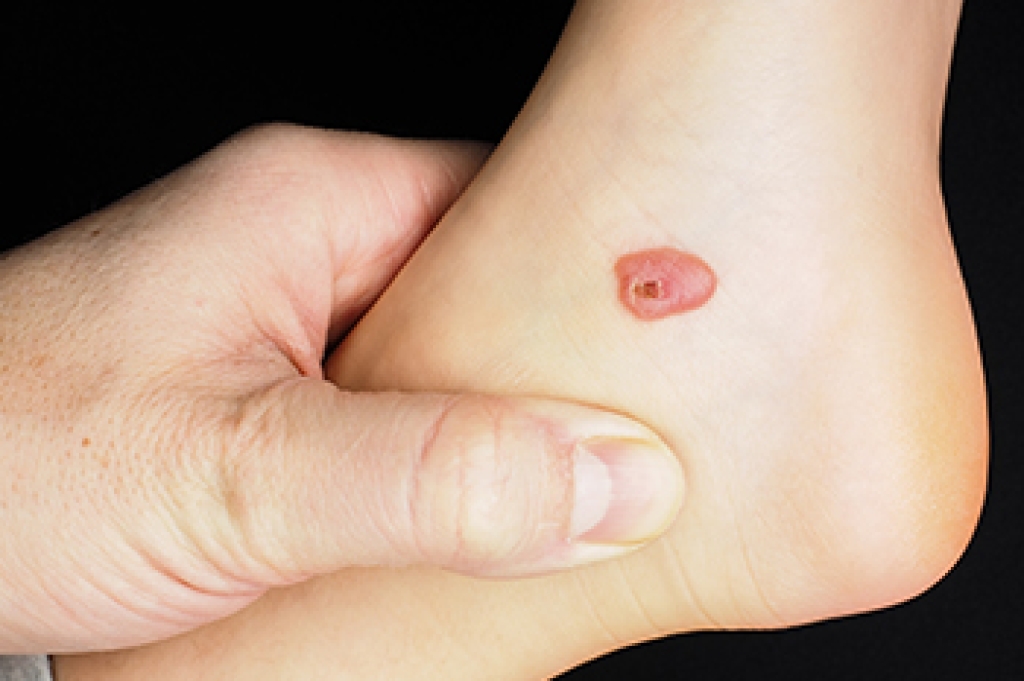
Foot blisters develop as a result of constantly wearing tight or ill-fitting footwear. This happens due to the constant rubbing from the shoe, which can often lead to pain.

What Are Foot Blisters?

A foot blister is a small fluid-filled pocket that forms on the upper-most layer of the skin. Blisters are filled with clear fluid and can lead to blood drainage or pus if the area becomes infected.

How Do Blisters Form?

Blisters on the feet are often the result of constant friction of skin and material, usually by shoe rubbing. Walking in sandals, boots, or shoes that don’t fit properly for long periods of time can result in a blister. Having consistent foot moisture and humidity can easily lead to blister formation.

Prevention & Treatment

It is important to properly care for the affected area in order to prevent infection and ease the pain. Do not lance the blister and use a Band-Aid to provide pain relief. Also, be sure to keep your feet dry and wear proper fitting shoes. If you see blood or pus in a blister, seek assistance from a podiatrist.

If you have any questions, please feel free to contact our office located in Redding, CA . We offer the newest diagnostic and treatment technologies for all your foot care needs.
Read more about Blisters on the Feet

Causes and Risks of Ankle Sprains in Athletes

Ankle sprains are common injuries, with half occurring during athletic activities. This injury happens when the ligaments that support the ankle stretch or tear, often due to sudden twisting or rolling of the foot. Athletes are particularly susceptible during sports that involve jumping, running, or rapid direction changes. The ligaments most frequently affected are the anterior talofibular ligament, the calcaneofibular ligament, and the posterior talofibular ligament. These ligaments connect the bones of the ankle and provide stability to the joint. When they are injured, symptoms include pain, swelling, and difficulty walking. Proper diagnosis and treatment are essential for recovery, often involving rest, compression, and elevation. Preventative measures include proper footwear, strength training, and exercises to reduce the risk of future sprains. If you have sprained your ankle, it is suggested that you make an appointment with a podiatrist who can properly treat this condition. 

Ankle sprains are common but need immediate attention. If you need your feet checked, contact Susan Yeager, DPM from Yeager Foot and Ankle Center. Our doctor can provide the care you need to keep you pain-free and on your feet.

How Does an Ankle Sprain Occur?

Ankle sprains take place when the ligaments in your ankle are torn or stretched beyond their limits. There are multiple ways that the ankle can become injured, including twisting or rolling over onto your ankle, putting undue stress on it, or causing trauma to the ankle itself.

What Are the Symptoms?

  • Mild to moderate bruising
  • Limited mobility
  • Swelling
  • Discoloration of the skin (depending on severity)

Preventing a Sprain

  • Wearing appropriate shoes for the occasion
  • Stretching before exercises and sports
  • Knowing your limits

Treatment of a Sprain

Treatment of a sprain depends on the severity.  Many times, people are told to rest and remain off their feet completely, while others are given an air cast. If the sprain is very severe, surgery may be required.

If you have suffered an ankle sprain previously, you may want to consider additional support such as a brace and regular exercises to strengthen the ankle.

If you have any questions please feel free to contact our office located in Redding, CA . We offer the newest diagnostic tools and technology to treat your foot and ankle needs.

Read more about Ankle Sprains

Connect With Us

scroll to top